

ZINGA vs. Hot-Dip Galvanising
Corrosion protection for DHA Karachi street light poles, with a project-based comparison of on-site zinc coating, inspection and maintenance.
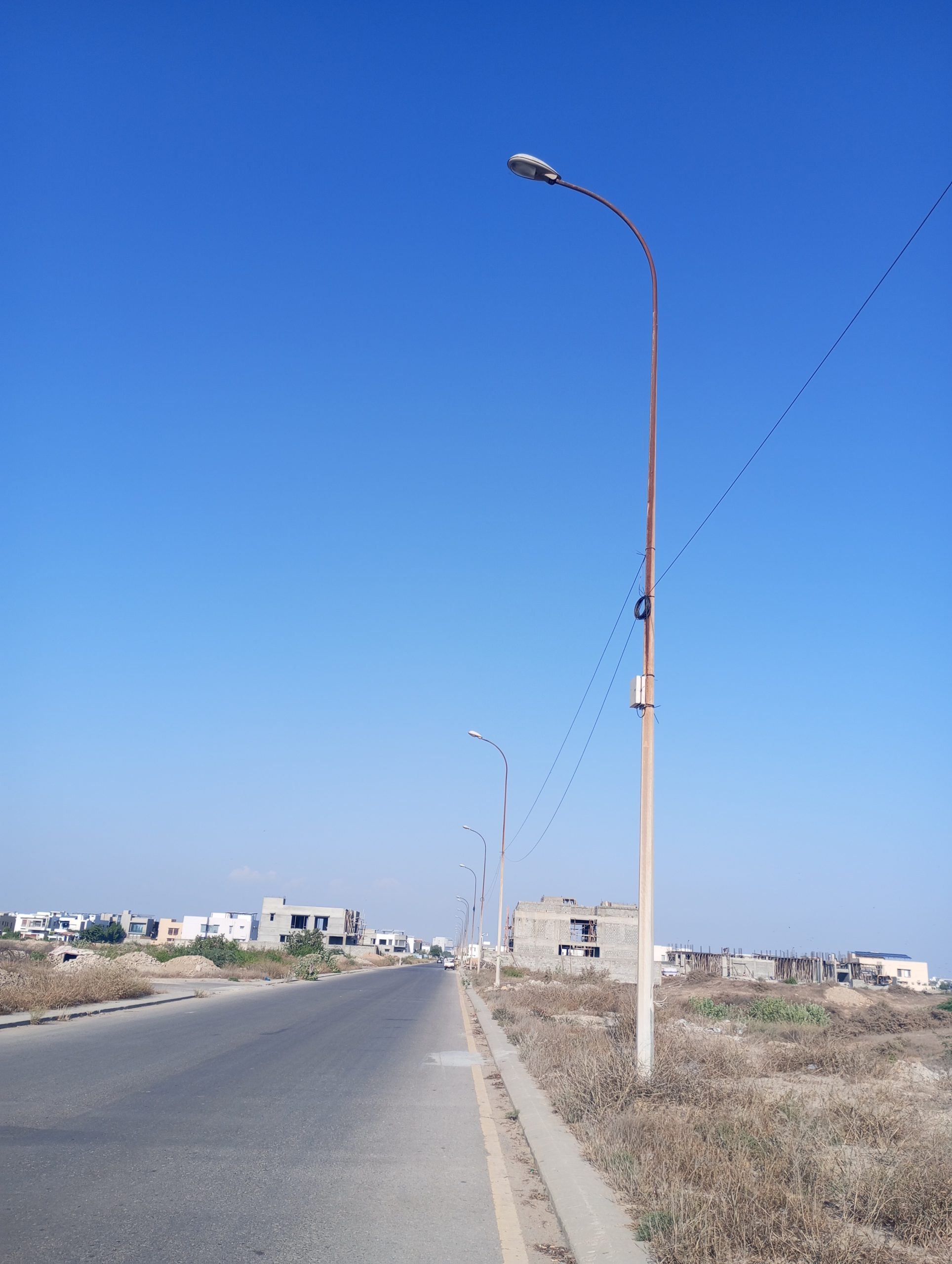
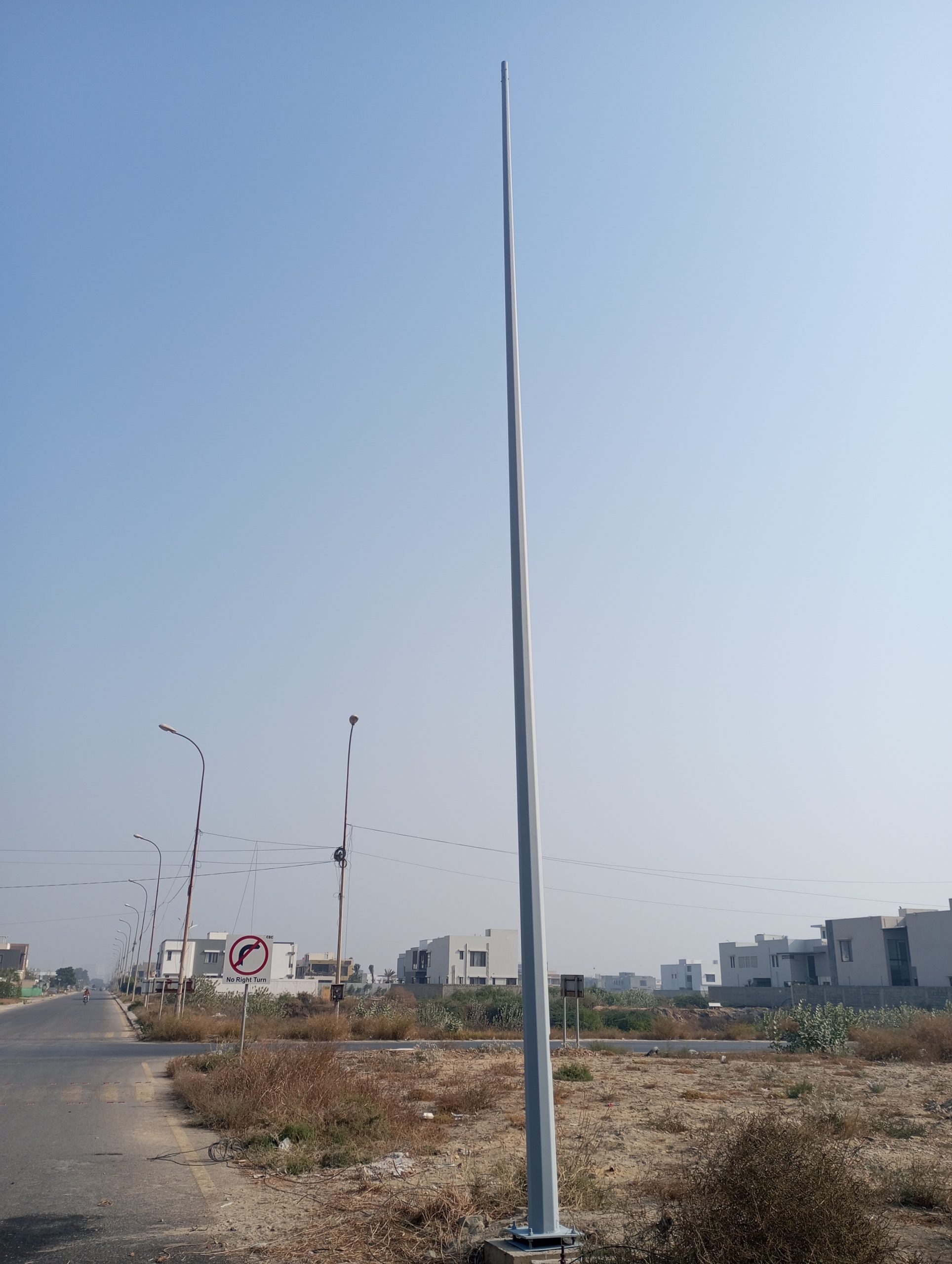
Before and After ZINGA Application
Compare the pole condition before coating with the completed ZINGA-protected surface.
Temperature Check and Follow-Up
Use the arrows to move through the supplied inspection photographs.
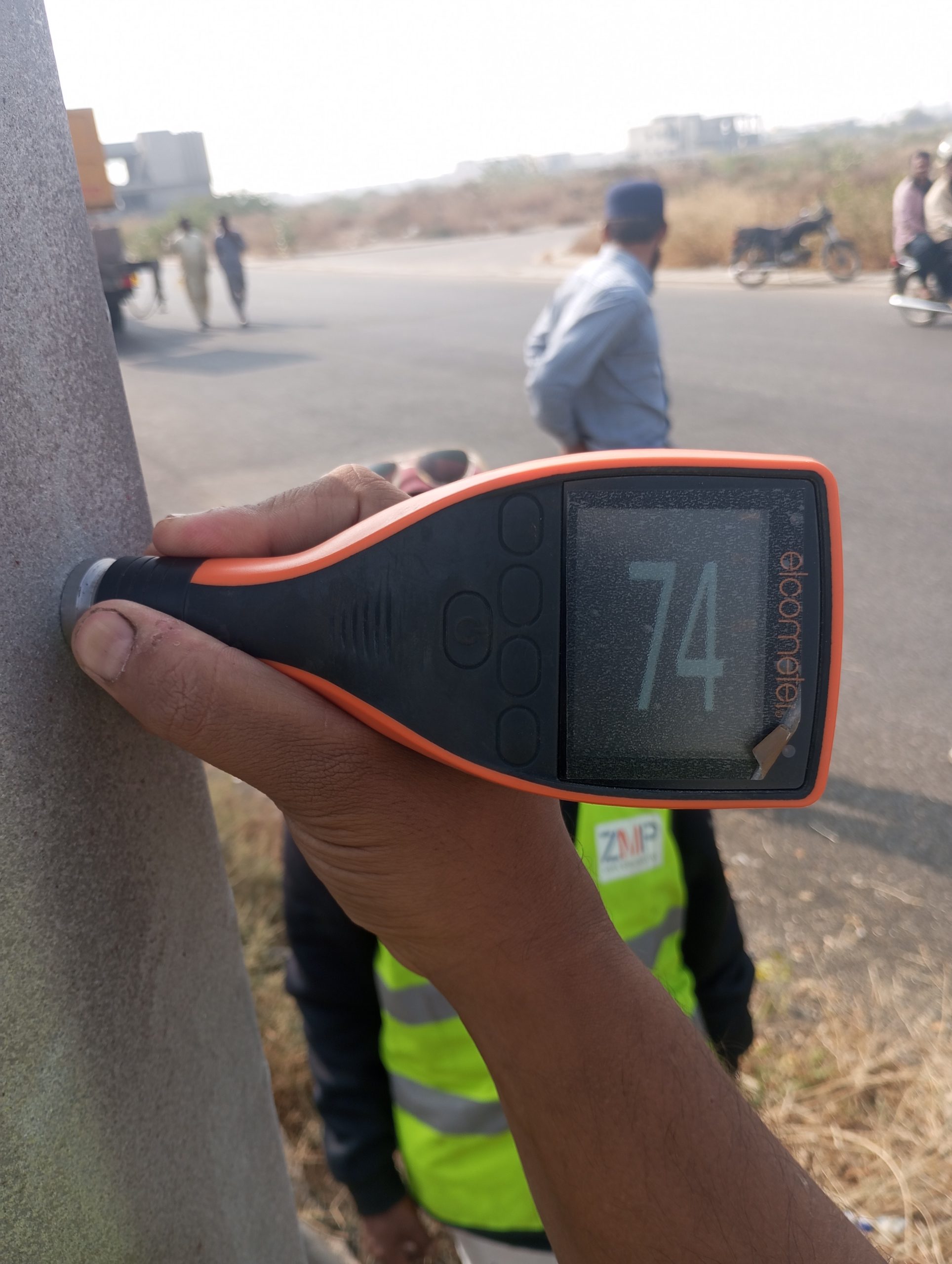
The follow-up image is labelled “3 Years After” as requested. Confirm the actual inspection interval and photograph date before publishing this time claim.
Zinc Protection Applied On-Site
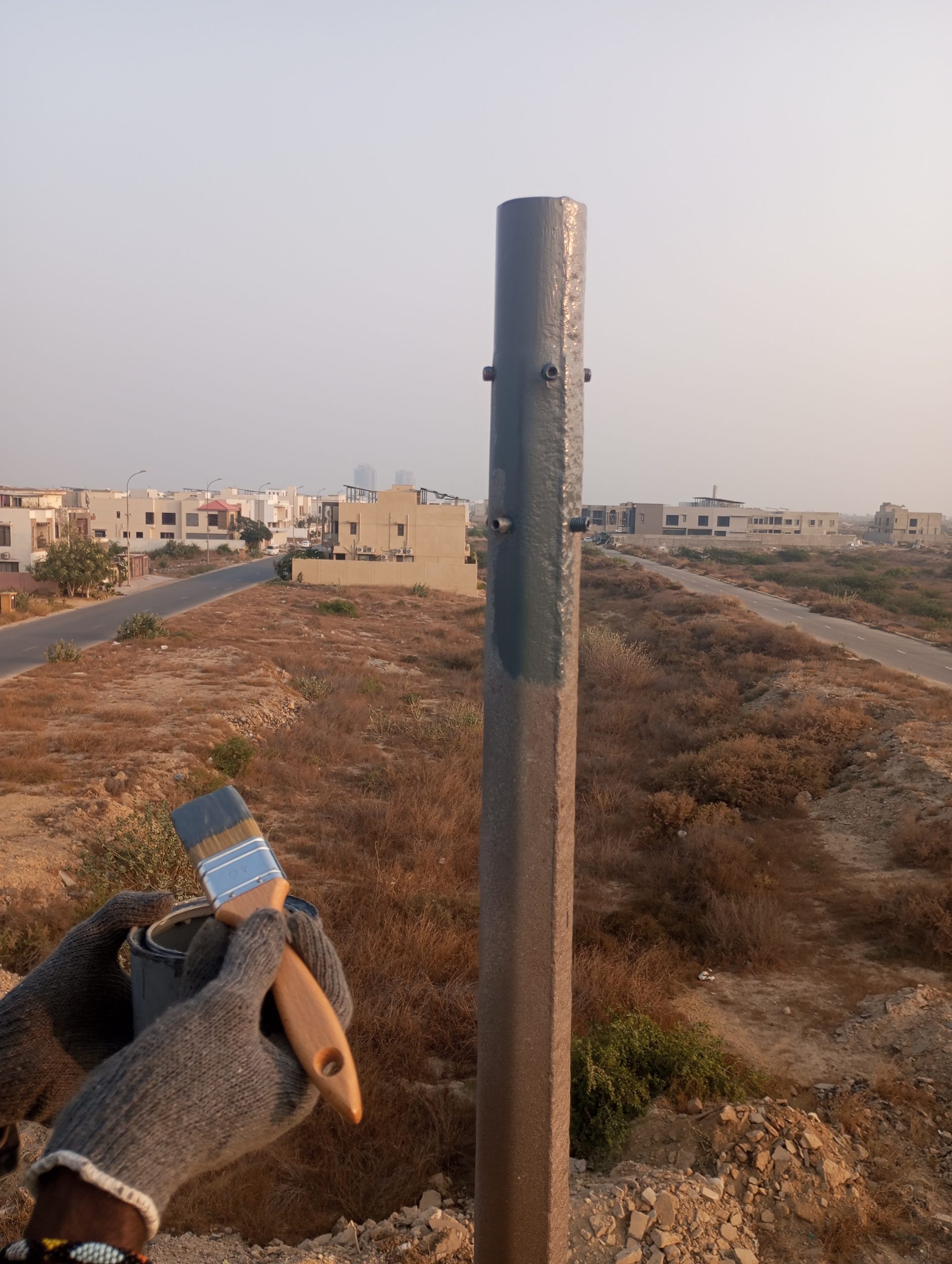
DHA Karachi’s 12-metre single-arm street light poles were treated with ZINGA as an on-site corrosion-protection solution. The steel surface was prepared by grit blasting to Sa 2½ in accordance with ISO 8501-1, followed by a two-coat ZINGA application at 45 µm DFT per coat, for a specified total of 90 µm DFT. The project demonstrates how an applied zinc-rich coating supports protection and maintenance of installed steel assets without transporting the complete poles for hot-dip galvanising. Follow-up inspection imagery documents the project condition after application.
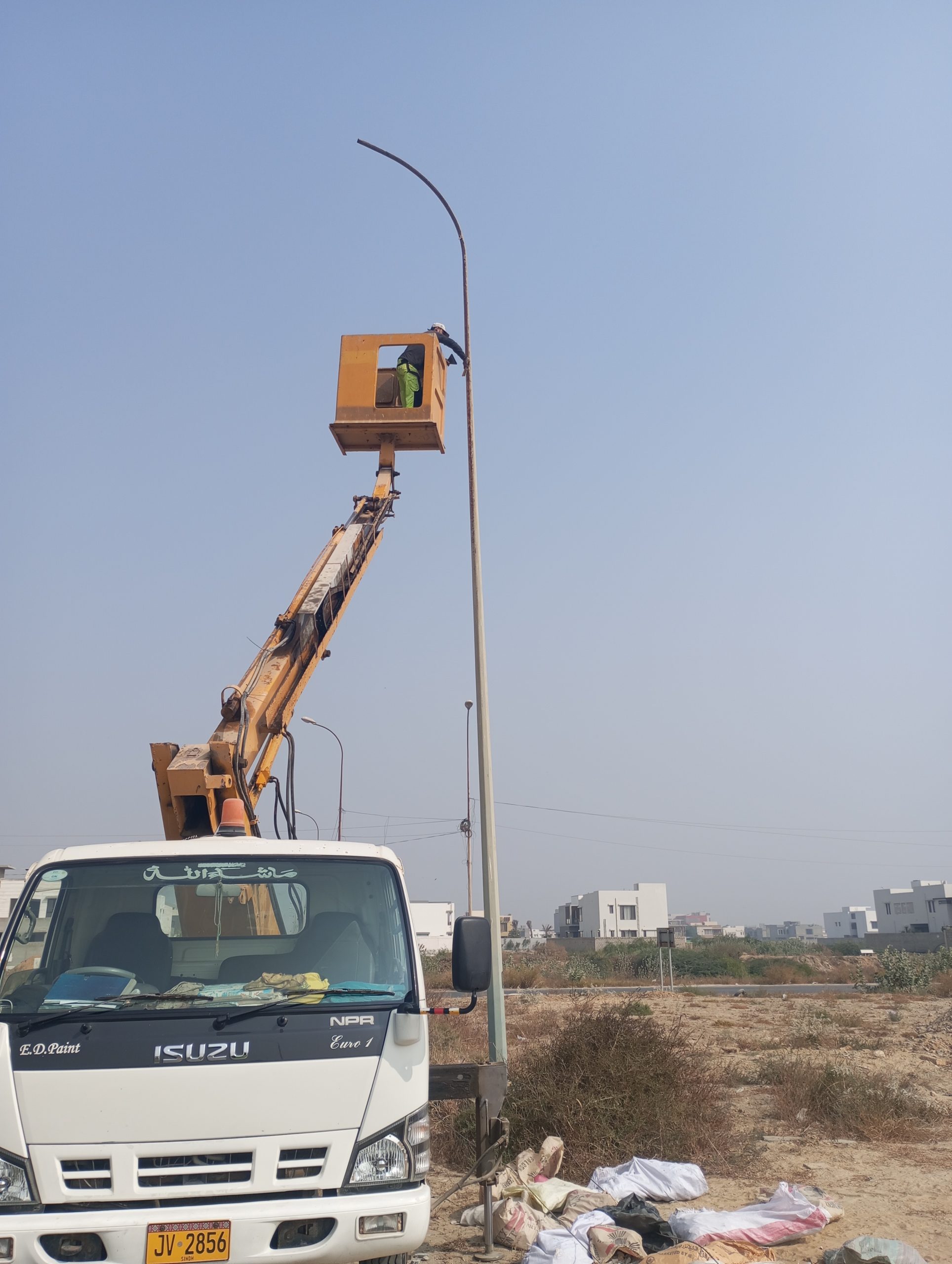
During Project Work
Photographs from the DHA pole preparation and application work.
ZINGA vs. Hot-Dip Galvanising
Feature-by-feature comparison focused on the practical requirements of this DHA street light pole project.
| Project Feature | ZINGA | Hot-Dip Galvanising |
|---|---|---|
| Applied directly to suitable prepared steel on-site | ✓ | ✕ |
| Suitable for maintenance of installed steel structures | ✓ | ✕ |
| Requires immersion in a molten-zinc bath | ✕ | ✓ |
| Can be applied without transporting the complete installed pole to a galvanising plant | ✓ | ✕ |
| Requires suitable surface preparation | ✓ | ✓ |
| Provides zinc-based sacrificial corrosion protection | ✓ | ✓ |
This table compares application and project logistics, not a universal performance ranking. Hot-dip galvanising remains a suitable factory-applied system for components designed for immersion. Final selection depends on project specification, access, preparation, environment and maintenance requirements.